📞 Call (540) 572-7229 — Free Estimate
Foundation repair signs are easy to dismiss individually — a crack here, a sticky door there — but in combination they tell a clear story about what is happening beneath your home. This guide covers every warning sign Roanoke homeowners should know, what each one means, and when it is time to stop watching and start acting.Cracks in Walls and Floors
Cracks are the most visible and most misread foundation warning sign. Not all cracks are equal and the type, direction, and location of a crack tells you far more than its width alone.
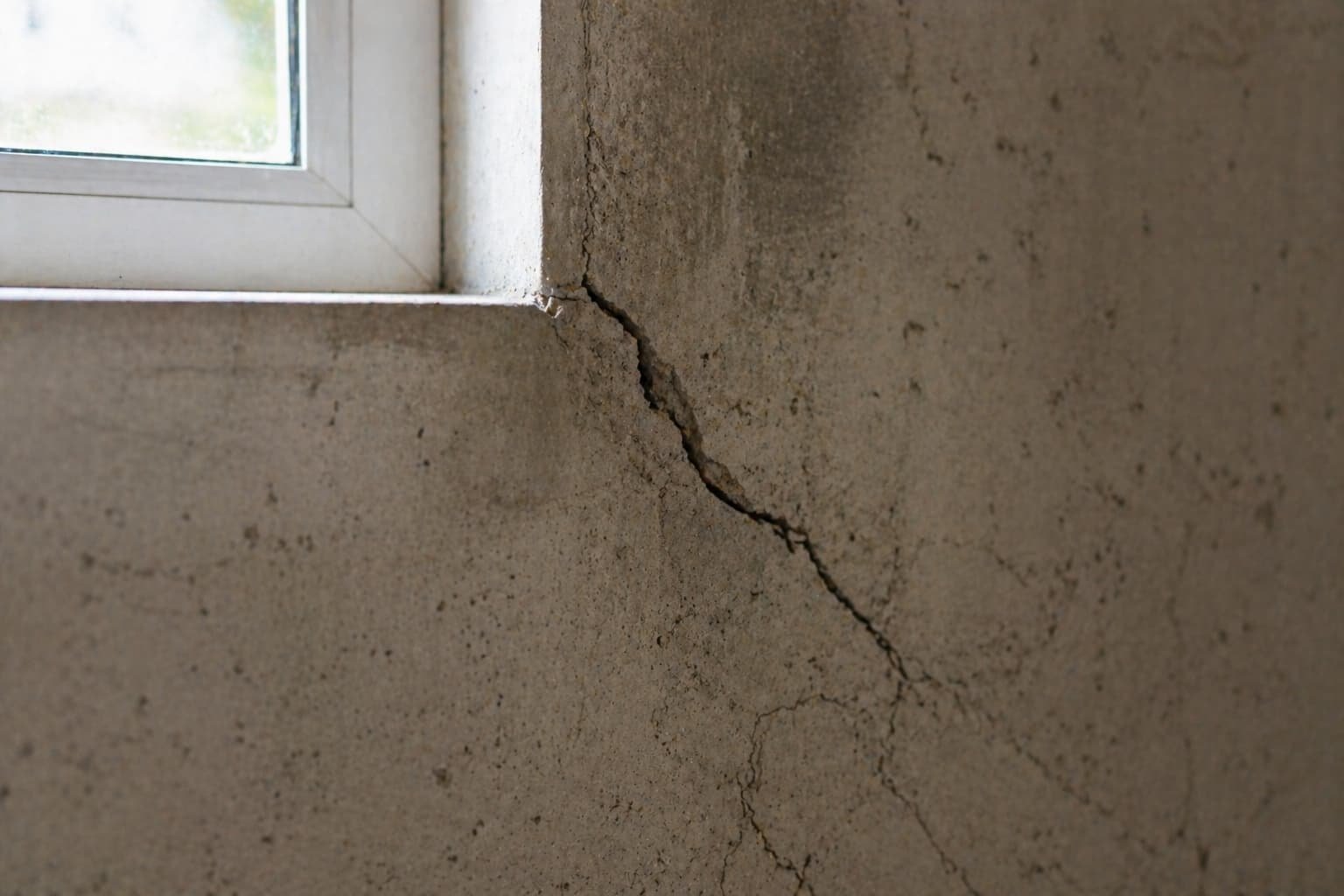
Diagonal cracks above door and window frames are one of the most reliable early indicators of differential settlement — where one part of the foundation is sinking faster than another. These cracks typically run at roughly 45 degrees from the corner of the opening and widen at one end. In Roanoke’s older neighbourhoods like Grandin Village and Raleigh Court, this pattern is common in homes where one corner sits on softer or wetter soil than the rest of the structure.
Horizontal cracks in basement walls are the most serious crack type and should never be dismissed as cosmetic. They indicate lateral soil pressure pushing the wall inward and are particularly common in block foundations throughout Roanoke, Salem, and Vinton. A horizontal crack at mid-wall height means the wall is under active load. If you see one, get an inspection booked promptly.
Stair-step cracks in block or brick foundations follow the mortar joints in a diagonal staircase pattern. They signal differential settlement or lateral movement and are common in the block foundations built throughout Southwest Virginia in the 1950s and 1960s.
Vertical cracks in poured concrete are often less serious — concrete shrinks slightly as it cures and hairline vertical cracks are common. However, a vertical crack that is wider at the top than the bottom, or that has displacement where one side sits higher than the other, is a structural concern rather than a cosmetic one.
Doors and Windows That Stick or Won’t Close
When a foundation shifts, the door and window frames move with it. Frames that were square become slightly parallelogram-shaped — and doors and windows that fit perfectly when the home was built begin to bind, stick, or gap at the corners. This is one of the earliest signs that settlement or soil movement is underway, often appearing before any visible cracking in the walls.
In Roanoke homes, sticking doors most commonly appear on the ground floor and in the basement level first. If multiple doors in the same area of the home start sticking around the same time, that clustering pattern points to a localised foundation issue beneath that section of the structure rather than normal seasonal wood movement.
Uneven or Bouncy Floors
Floors that slope, dip, or feel springy underfoot are a sign that the structure beneath them has moved. In homes with crawl spaces — common throughout the Roanoke Valley — this often indicates that support piers or beams within the crawl space have settled or deteriorated. In slab-on-grade homes, an uneven floor usually means the slab itself has settled in one area.
A floor that has developed a noticeable slope toward one corner of the room over the past year or two is a more urgent sign than one that has been gently sloped for as long as anyone can remember. Rate of change matters as much as the degree of slope.
Gaps Between Walls, Floors, and Ceilings
Separation between interior walls and the ceiling, or between the floor and a wall baseboard, indicates that different parts of the structure are moving independently. This is a reliable sign of differential settlement — one part of the foundation moving more than another. In Roanoke homes on clay soil, this pattern often develops gradually over several seasons before it becomes noticeable enough for a homeowner to register it as a problem.
Moisture and Water in the Basement
Water in the basement is both a foundation symptom and a foundation cause. Chronic moisture weakens mortar joints, promotes efflorescence, and accelerates the deterioration of block foundations from the inside. If your basement smells musty, shows white mineral deposits on the walls, or has standing water after heavy rain, the underlying drainage issue is putting ongoing stress on your foundation walls whether or not you can see visible cracking yet.
When to Stop Watching and Call
Any single sign on this list warrants monitoring. Two or more signs appearing together — especially if they have developed or worsened over the past twelve months — warrant a professional inspection. Foundation problems do not resolve on their own and the cost of repair increases with time. A free inspection from Foundation Roanoke gives you a clear diagnosis and written estimate with no obligation to proceed.
For more context on how Roanoke’s soil and drainage conditions drive the foundation issues described above, the FEMA flood map service is a useful reference for understanding your property’s specific risk profile.